Fremont, California

EV charging stations, installed and supported across the Bay Area

AxionVolt supplies UL-listed Level 2 and DC fast charging hardware, installs it under our own C-10 electrical license, and keeps it running afterward. One company from site survey to the final inspection sign-off.

Serving Fremont, San Jose, Oakland, San Francisco and the wider East Bay · Licensed & insured · CA C-10 #1094882

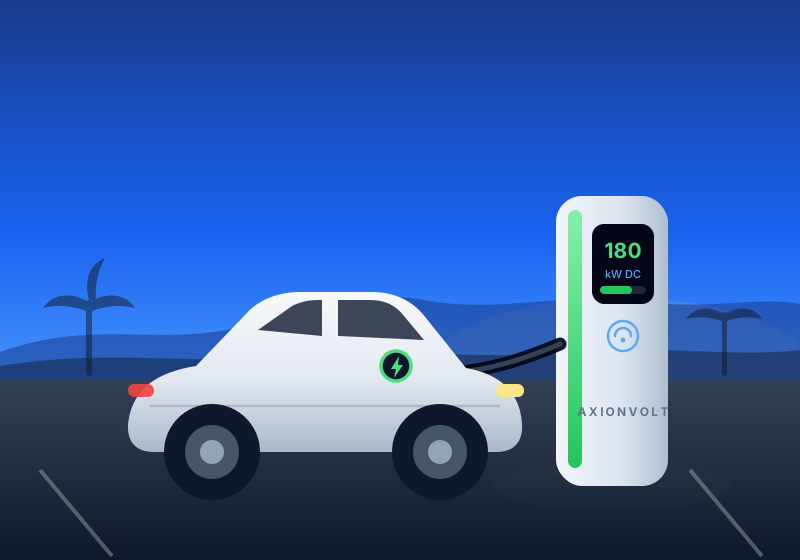
An electric car plugged into an AxionVolt DC fast charging station in a California parking lot at dusk
2,400+
Charging ports installed since 2019
4-6 hrs
Typical home install, start to finish
99.2%
Uptime across our managed network
3 yr
Parts and labor warranty, standard

The hardware

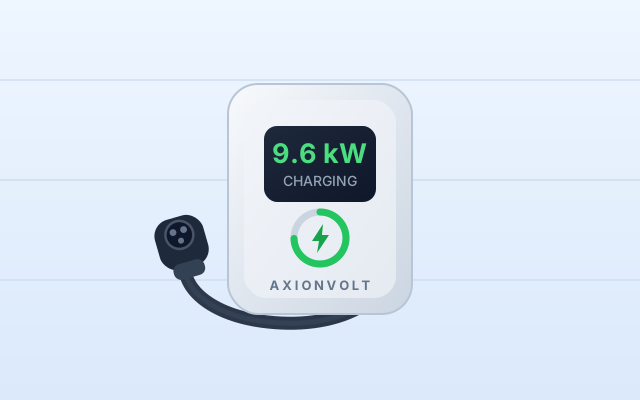
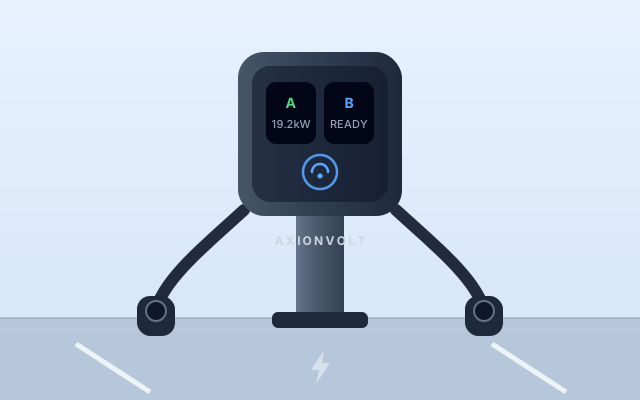
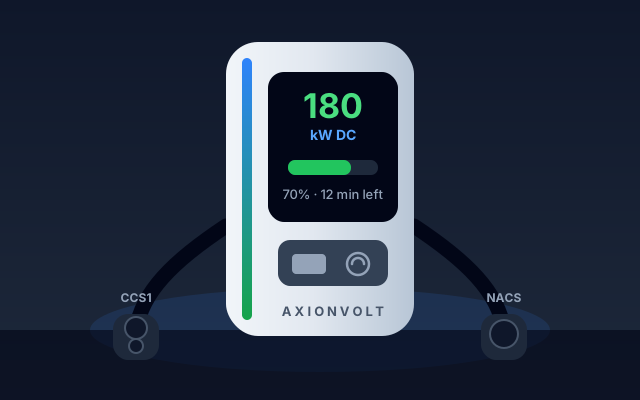
Three chargers, matched to how the vehicles actually park

The right unit depends on dwell time. Cars parked overnight need far less power than cars parked twenty minutes. Picking correctly is the difference between a reasonable electrical bill and an expensive service upgrade you did not need.

How it works

From first call to first charge

Most delays in EV charging projects come from utility coordination and permitting, not from the electrical work itself. We front-load both.

1. Site survey

We photograph your panel, measure the conduit run and check available capacity. Residential surveys are free; commercial surveys are credited against the project.

2. Fixed quote & permit

You get a line-item price that does not move. We pull the electrical permit and file any utility make-ready or rebate paperwork that applies to your site.

3. Installation

Our own W-2 electricians do the work — we do not subcontract. Homes are finished in one visit; commercial sites get a scheduled phase plan.

4. Inspection & support

We meet the city inspector, commission the unit and hand over the app. Three-year warranty, with remote monitoring on every networked charger.

Who we work with

Different buildings, different constraints

Homeowners

The common surprise is panel capacity. A 100-amp service with electric heat and an induction range may not have room for a 40-amp charger without load management. We check that before quoting, not after.

Home charging →

Workplaces & multifamily

Ten employees wanting chargers rarely means ten new circuits. Load sharing across a shared feeder usually delivers the same practical result at a fraction of the infrastructure cost.

Commercial charging →

Fleets & public sites

Depot charging lives and dies on demand charges. We model your duty cycle first, because staggering the charge window often saves more money than any hardware choice available to you.

DC fast charging →

California incentives

Rebate money is real, but the windows close

California funds EV charging infrastructure aggressively, and the programs change often. The federal 30C tax credit is gone — it expired on 30 June 2026 — and any installer still advertising it is quoting you a benefit that no longer exists.

What remains active is CALeVIP's Fast Charge California Project, which announced $55.2 million in new funding in May 2026 and covers eligible public DC fast charging ports at up to $100,000 each. Application windows open in October 2026 and February 2027.

See what your site qualifies for

Heads up on the 30C credit. If you were counting on the 30% federal credit, that deadline has passed. Build your budget without it and treat any state or utility rebate as upside rather than as a load-bearing assumption.

Programs we currently file for

  • CALeVIP Fast Charge California — DC fast, up to $100k per port
  • PG&E EV Fast Charge make-ready infrastructure support
  • Local air district and municipal charging grants, where offered
  • Utility rate analysis to pick the cheapest charging tariff

Common questions

What people ask before they book

How much does it cost to install an EV charger in the Bay Area?

A typical single-family Level 2 installation runs $1,400 to $3,200 including hardware, permit and labor, assuming your panel has spare capacity within about 40 feet of the parking spot. Long conduit runs, trenching under a driveway, or a 200-amp panel upgrade push the total higher. We quote a fixed price after the survey, so the number you approve is the number you pay.

Do I need a permit to install an EV charger in Fremont?

Yes. Any new 240-volt circuit requires an electrical permit and a final inspection. Skipping it is a genuine problem at resale and can void your homeowner's insurance after an electrical fire. We pull the permit under our C-10 license and meet the inspector, so it is not your paperwork to chase.

How long does installation take?

Most residential Level 2 installs finish in four to six hours in a single visit. Commercial multi-port projects run two to five days on site. DC fast charging is the outlier — it depends on utility service timelines, and in PG&E territory three to nine months from application to energization is normal. We start that clock on day one for exactly this reason.

Which rebates can I still get in California?

The federal 30C tax credit expired on 30 June 2026. The active statewide program is CALeVIP's Fast Charge California Project — up to $100,000 per DC fast charging port, with windows opening October 2026 and February 2027. Several utilities including PG&E run separate make-ready programs. We track the windows and prepare the application for you.

Will a Tesla work with an AxionVolt charger?

Yes. Our Level 2 units use a J1772 connector, which every Tesla sold in North America accepts using the adapter that ships with the car. The AX-Rapid 180 carries both CCS1 and NACS cables, so a Tesla plugs straight in with no adapter at all.

What happens if the charger breaks?

Every unit carries a three-year parts and labor warranty. Networked chargers report faults to us automatically, so we often know a unit is down before you do. Commercial customers can add a service agreement with a four-hour response target during business hours.

Find out what your site actually needs

Send us a photo of your electrical panel and where you park. We will tell you what is possible, what it costs, and whether any rebate applies — before you commit to anything.